Launching GDS: selling seats on private flights
- TL;DR
- Product: at the end of 2024, MySky, a B2B fintech for private aviation operators, launched a second business: GDS, a B2C marketplace that sells seats on private flights instead of the whole aircraft.
- Problem: get an MVP to market fast, without a finished PRD, on top of an integrator whose limits we were discovering as we went.
- My role: lead product designer. I gathered and clarified the context, often in place of a PRD, wrote the hypotheses and success criteria, built the UX architecture and prototypes, designed the admin side of the MVP, helped choose the strategy and supported development through the iterations.
- Result: the MVP is live, and the product is testing its hypotheses and looking for market fit. The first version of the design took about two weeks; the rest of the time went into validation and fitting the integrator’s limits.
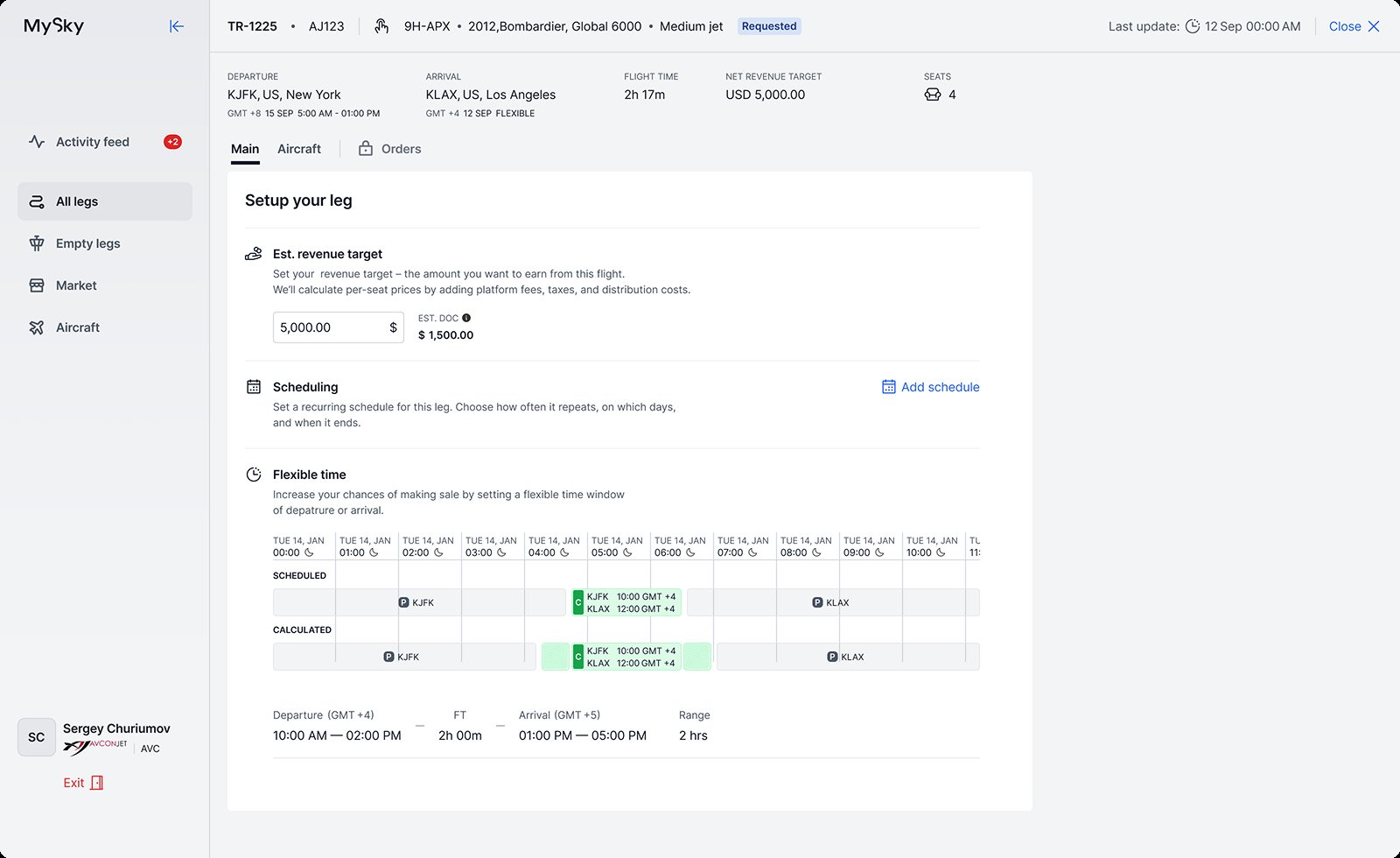
The task
At the end of 2024 we were launching GDS and had to get an MVP to market fast. We needed:
- a clear, trustworthy way to buy a seat on a private flight, through external platforms and our own B2C layer;
- a tool simple enough for operators to publish a flight in a few minutes;
- to fit the integrator’s limits instead of building a nice interface that no process could support.
The success criterion for the MVP: an operator publishes a flight without support, and the data reliably reaches the integrator and the platforms.
Two businesses in one company
Until then MySky had been B2B fintech for private aviation operators: operations, finance, documents, automation. The new service carried such high expectations that inside the company we started splitting the business in two, SaaS and GDS. The idea was to help operators not only run flights but sell them. As a marketplace, we could raise aircraft utilisation by selling seats instead of the whole aircraft.
My role was a product one at heart. Besides the interfaces, I did what usually dissolves between product, design and analytics: dug up missing information, assembled the picture of the process, checked the integrator’s documentation and limits, wrote hypotheses, presented and defended the strategy to C-level, and then took the solution to an MVP.
What was there before
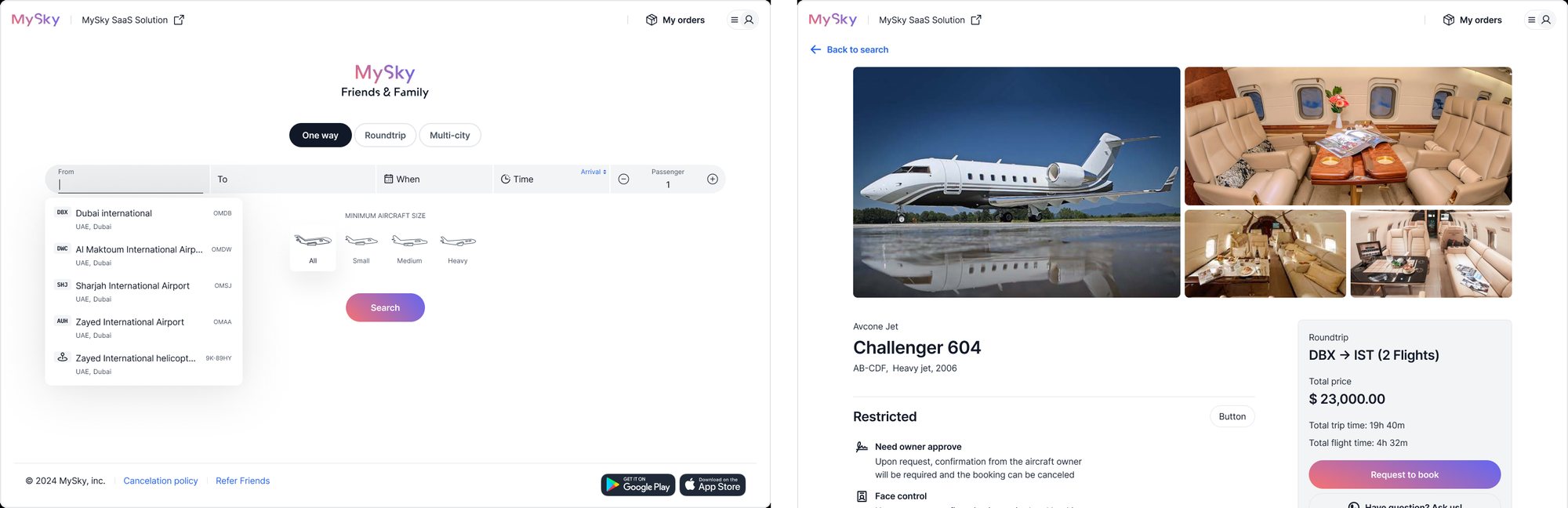
MySky already had an external B2C service for partners. You could price a flight, see the aircraft and white-label the service in an operator’s colours, but it sold only the whole aircraft, a charter. GDS is a different model: a seat on a private flight with 4 to 20 seats. That means a different experience, different pricing and a different value; sometimes it competes with business class.
Moving before the picture was clear
To be honest, we have a cultural habit of hitting the gas before we fully understand the picture. It speeds up the start but sometimes means moving by feel, extra iterations and rebuilding decisions once real limits appear. In this project it showed clearly: some decisions looked logical on the diagram until we hit the integrator’s limits and saw that some scenarios wouldn’t work the way we had built them.
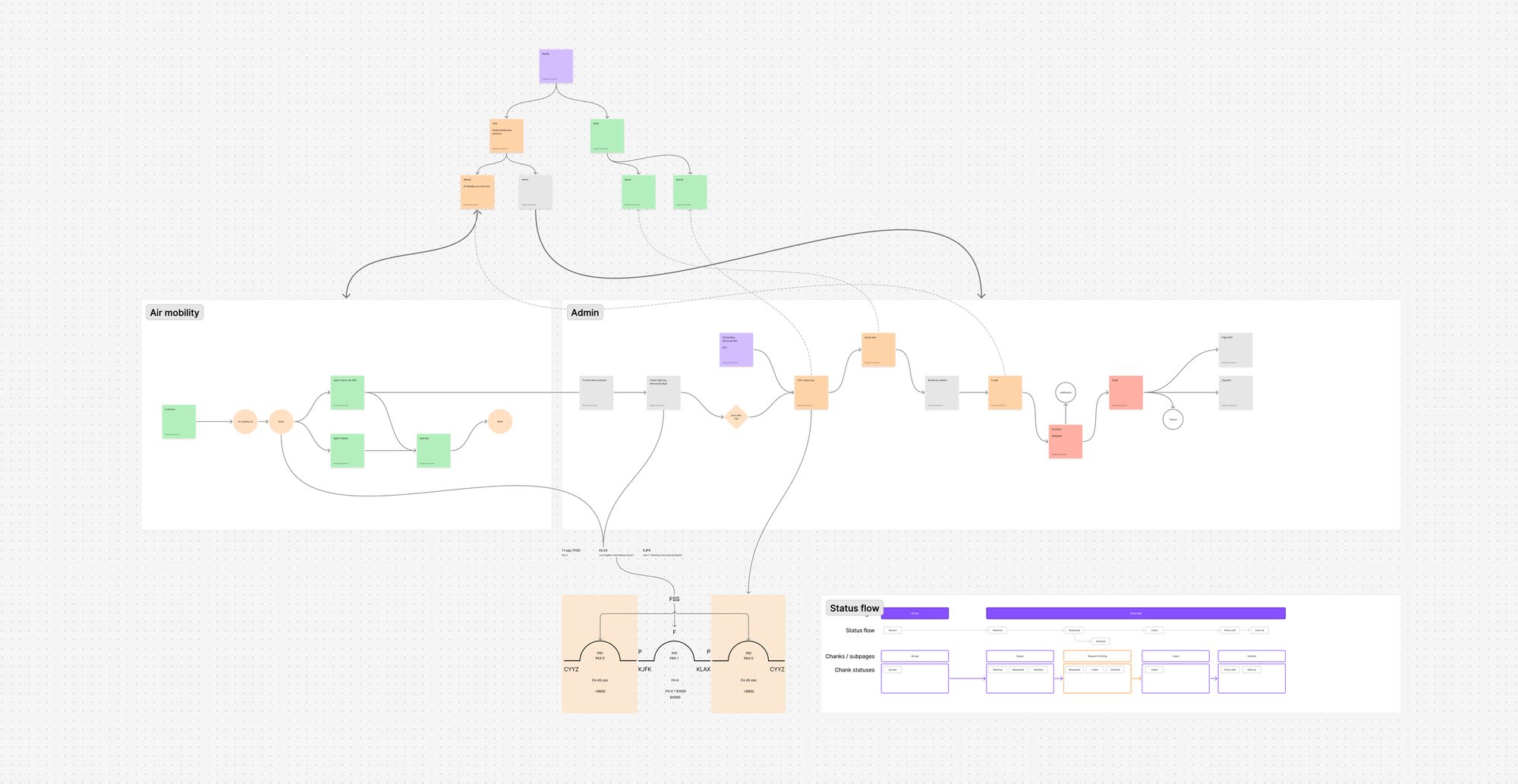
GDS was not one more interface but a new business model with outside dependencies. Publishing and sales go through a third-party system, the integrator and its back office, and from there to Google Flights, Skyscanner, Kayak, Booking and Expedia. These platforms work in two ways:
- OTA: the purchase happens inside the platform;
- metasearch: the search happens on the platform, the purchase with the seller. That is what our B2C part was for.
So the B2C site was not a marketing page. It was the point of trust and purchase, where a person has to understand who the operator is, how the service works and why they can trust it.
Research alongside design
We built our understanding at the same time as the design, on purpose. With an incomplete PRD and outside limits, we took a pragmatic route:
- drew the first diagram of how the process should work from the business side;
- made early prototypes and mockups to test hypotheses in meetings and clarify the picture fast;
- dug into the integrator’s limits in parallel: what we could automate on our side and what would stay in its back office.
We weren’t drawing pretty screens. We were assembling a working model of the product, checking business expectations against what the integrator could do and how operators actually work.
The turning point
Hypothesis: the existing B2C service already has most of the search experience, so we can merge its charter experience with the new seat experience.
That would:
- cut the design and development needed for the launch sharply;
- keep the journey going when there is no seat, showing the whole aircraft as a fallback;
- sell seats to the audience we already had;
- widen what the product offers.
I prepared the design and materials for C-level, presented the hypothesis and got agreement; it became the strategy. At the same time we made the second key decision: in the MVP, focus on the B2B admin, because without it nothing launches.
The admin: five minutes a week
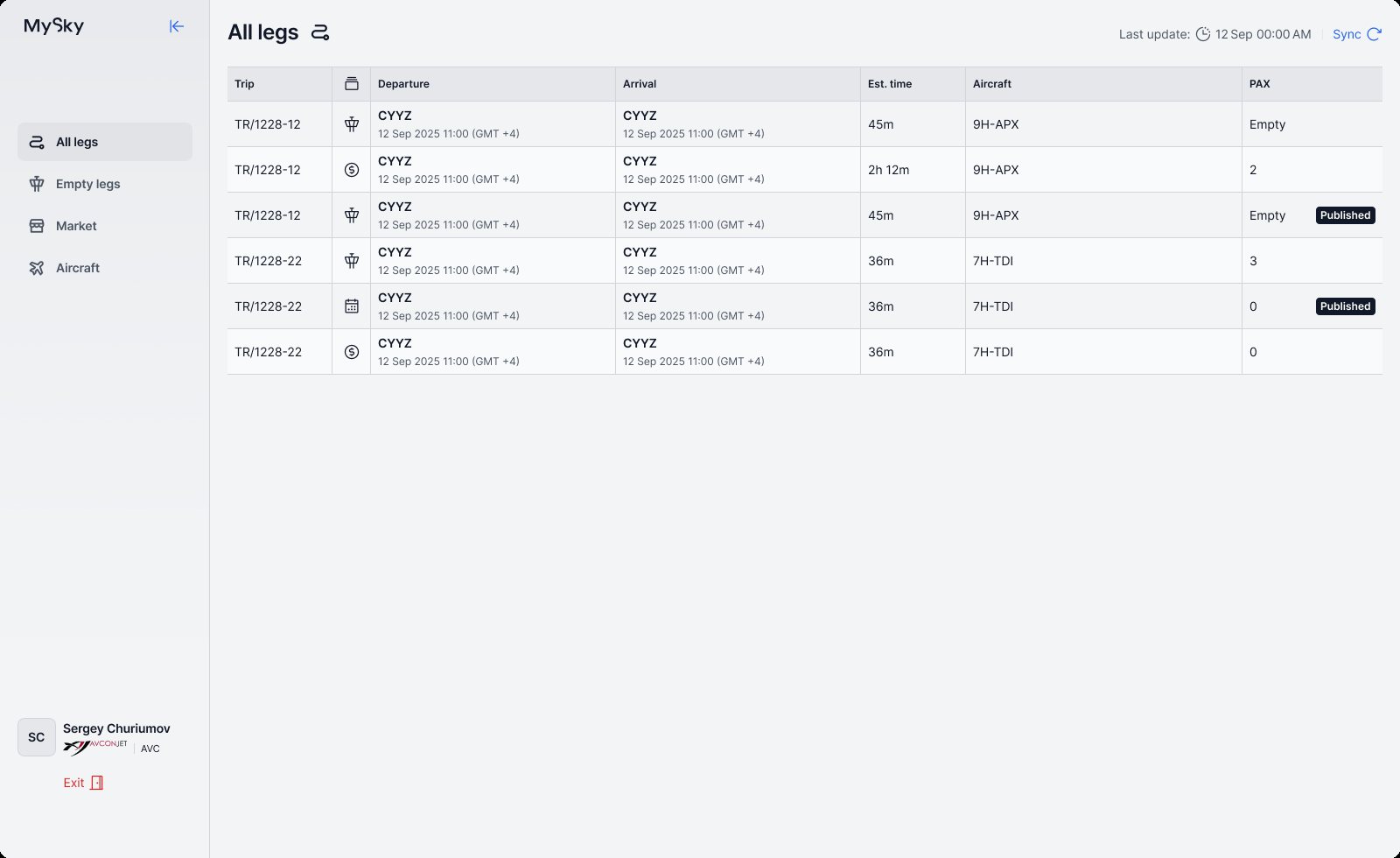
We assumed a very small point of contact. An operator already runs flights in their own system and comes to us only to find a flight, set a price, the amount they want to earn, and publish. Everything heavy happens inside MySky: we split the flight into seats, optimise, and publish to the platforms through the integrator.
We dropped part of the admin controls because of the integrator. We had wanted more control and statuses on our side and had even drawn a detailed flow. Then we hit the integrator’s real limits and made the grown-up call: no pseudo-control where real control is impossible, and the back-office settings stay with the integrator. That cut the scope, sped up the MVP and lowered the risk.
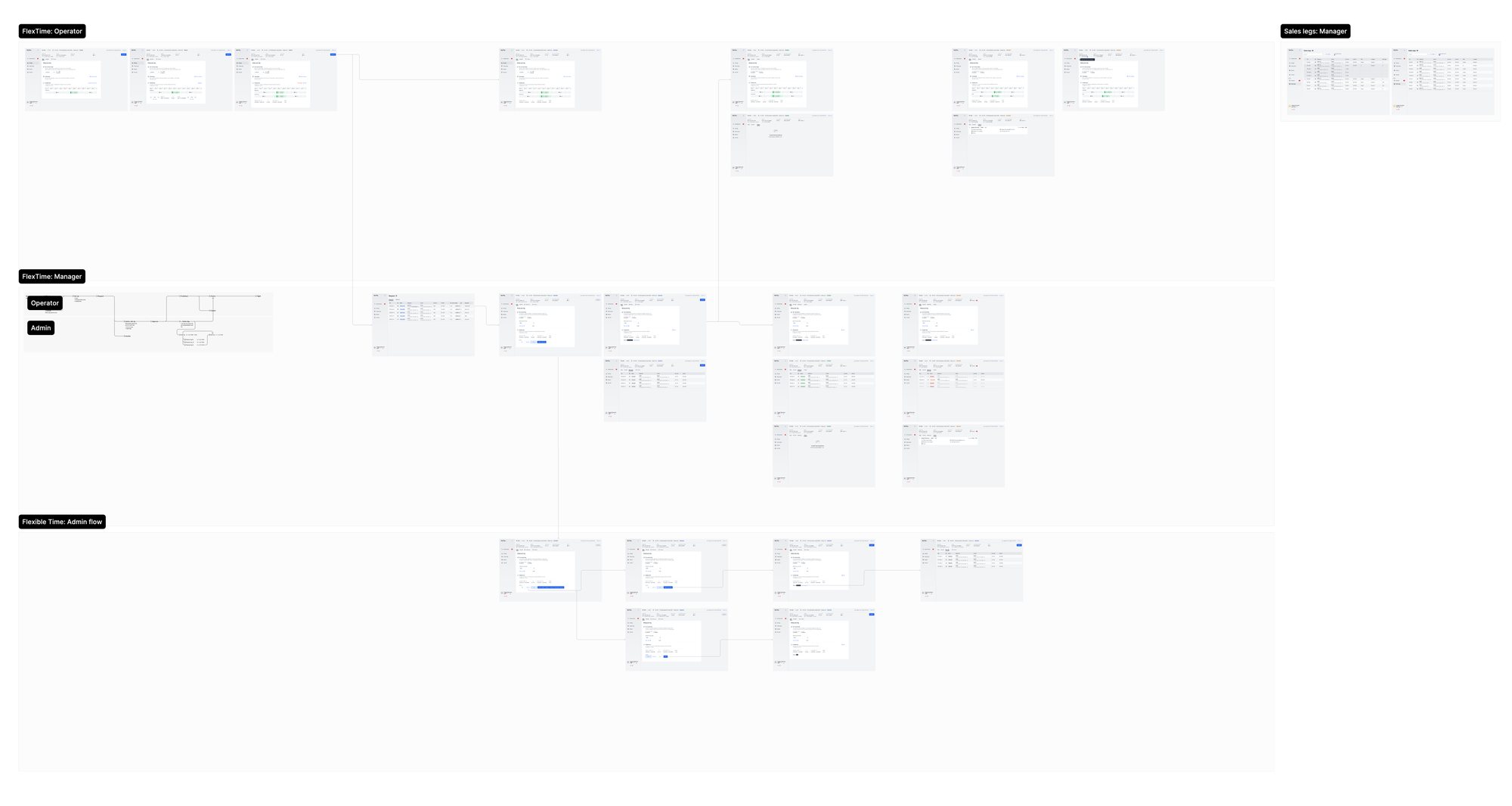
The interface came out very simple and rests on two screens: a table where the operator finds flights, and a flight page where they publish one. Everything else serves these two scenarios. The flight page is the key one: it opens from notifications and from the tables. Behind its simple look are many variants of how it changes with the flight’s lifecycle and the user’s actions.
Why it held up
We designed an honest MVP for reality, not an ideal product. Three things made it hold:
- we cut the scenario down to the core value: publishing a flight in as few steps as possible;
- we dropped the illusion of control and didn’t build a complex admin the integrator couldn’t support;
- we widened the future by merging the B2C experiences: charter plus seats grows the value without doubling development.
Before the MVP we cleaned out a lot of functionality, and in one place the experience got harder than we wanted. We kept that as a conscious trade-off: better to launch and test the hypothesis than spend half a year building an ideal scenario with no market.
How we validated
We showed prototypes and the UI to our operators, the future clients, several times, collected feedback and adjusted the approach. We changed the structure and approach about three times: the real process model kept getting clearer, the integrator’s limits kept surfacing, and the partner’s inputs changed; at one point they rolled us back on what was possible.
That was painful for frontend and backend, but this is what testing a hypothesis in the real world looks like. We arrived at a version that could actually launch and be tested by the market.
Result
- The MVP is live, and the product is actively testing its hypothesis.
- Operators gave us many insights that shaped the structure and the scenarios.
- The first version of the design took about two weeks; the rest went into validation and the integrator’s limits.
- The final version went into development, not the early concepts: the iterations happened before the expensive stage.
There are no final business metrics yet, so we set what to measure in the first iterations:
- the share of operators who publish a flight without help;
- the share of errors and rollbacks during publishing, from GA4 and Sentry;
- the share of flights that go through the whole cycle and appear on the platforms;
- if possible, how much an operator’s utilisation grew. Our SaaS services let us see, if indirectly, how much we affected it.
What I took away
Working where design meets product management, I assembled the picture of the process and helped structure the approach and the hypotheses. The hypotheses were validated, and a working MVP went into development that operators accepted and started using.
After that I hired a designer for the product and handed the project over with the diagrams, the decision records and the context on limits and scenarios, so onboarding was quick and nothing was lost.